Conversation: Forbidden Culture – Forbidden People
Conversation: Forbidden Culture – Forbidden People
at –
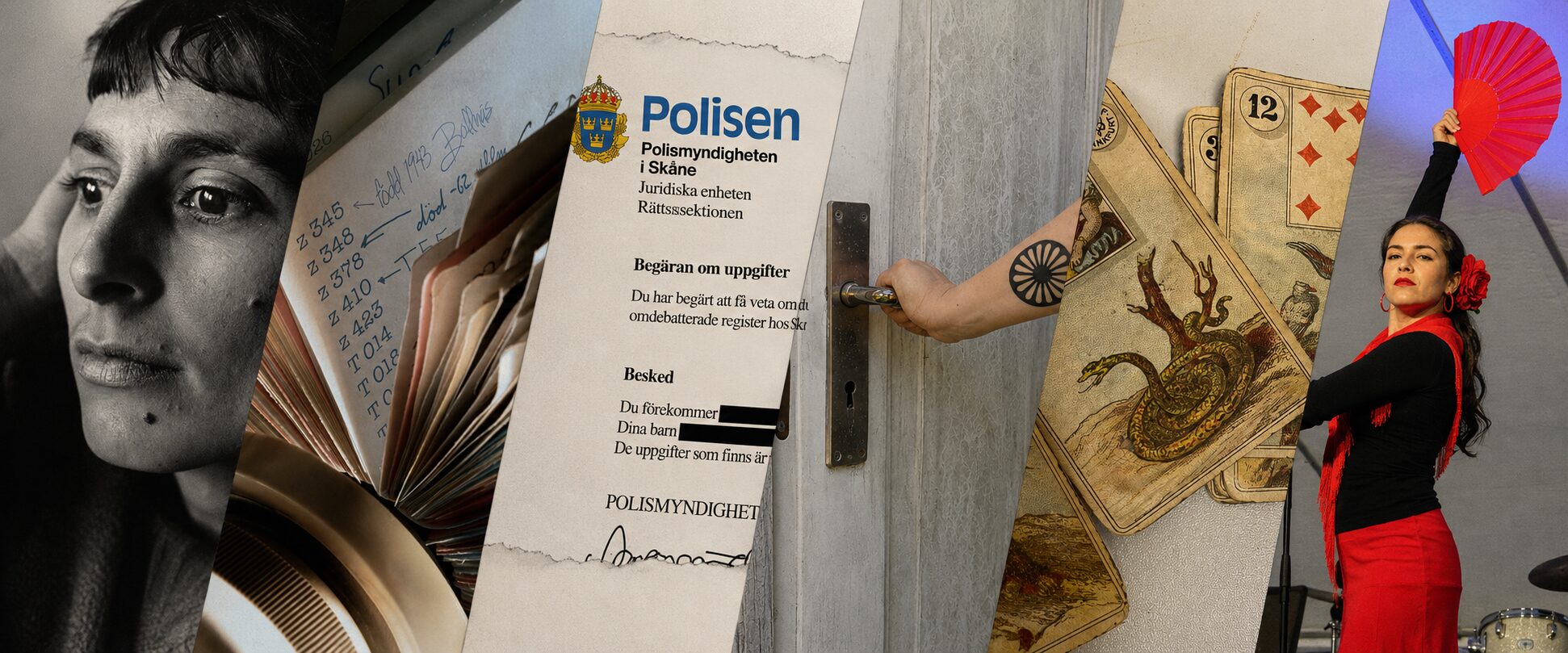
A conversation highlighting examples of how Roma life and cultural expressions have been prohibited – through Sweden’s Vagrancy Act, the expulsion of Roma, the exclusion of Roma by the Church, and bans on flamenco and fortune-telling. These examples offer insight into the persecution and exclusion of Roma people, and how traces of the Roma minority’s existence and presence have been restricted, made invisible, or portrayed as a threat to society.
In 1560, Archbishop Laurentius Petri wrote a reprimanding letter to a priest who had baptised a Roma child: “I am surprised and angered by your actions, since I have so often warned you not to associate with the evil people.” Throughout history, Roma life has been prohibited in various ways in Sweden and across Europe. These prohibitions have taken the form of laws, social norms, and discourses portraying Roma as “the other”. This discourse laid the foundation for a brutal policy of assimilation that included abuses such as forced sterilisation and, in its most extreme forms, led to slavery and the Holocaust.
What consequences can prohibiting a minority’s cultural expressions and way of life have for society? What is prohibited today? These are some of the questions that will be discussed during the conversation.
Information
What: Conversation
When: Wednesday 14 October, 17:00–18:30
Where: C Hall
Admission free, drop in
The event is organised by RIKC (Roma Information and Knowledge Centre) and is part of “Forbidden Culture Week
Read more about Forbidden Culture Week on the City of Malmö’s website.