History
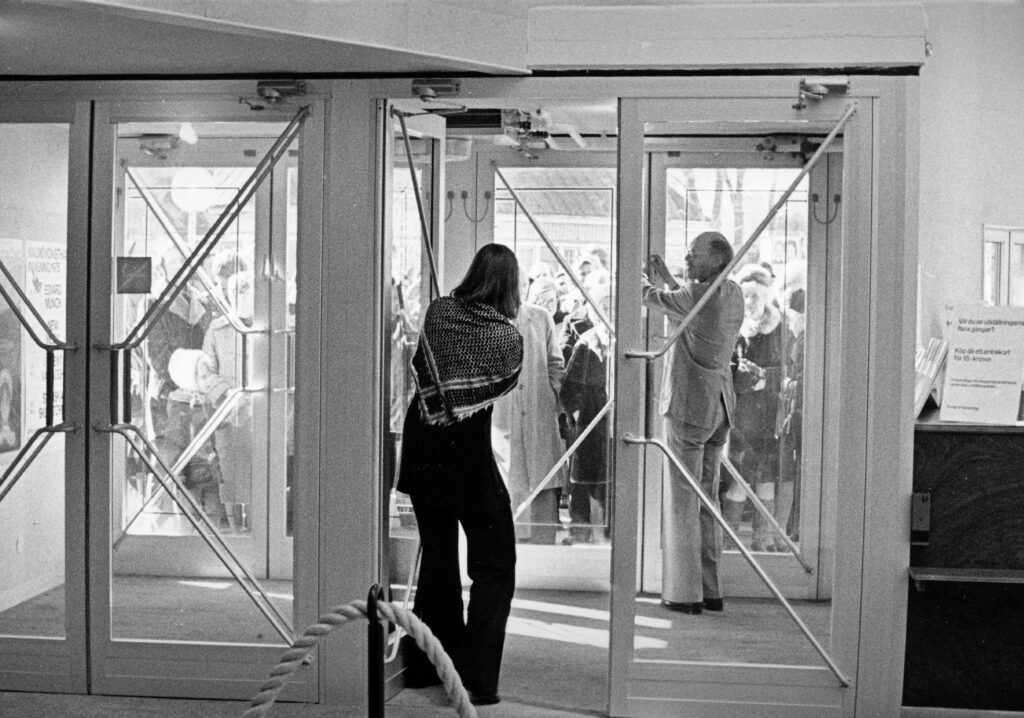
Malmö Konsthall opened its doors on March 22, 1975. The establishment of an art hall in Malmö had been discussed since the late 19th century, but it would not be until 1975 that the dream of an art hall in Malmö became a reality. Since its opening, the art hall has presented nearly 600 exhibitions.
Grassroots Initiative
As early as 1931, several members of the Skåne Art Association took the initiative to establish an art hall in the city. They formed a foundation and organized a large goods lottery to finance the project, but the plans were never realized. During the 1960s and early 1970s, the discussions gained new momentum. The social climate, along with the recurring cultural-debate slogan “Art to the people,” once again highlighted the need for an open exhibition space for contemporary art – a place where the people of Malmö could encounter art without barriers. In 1971, the City of Malmö decided to establish a municipal art hall and announced an architectural competition. The competition was won by architect Klas Anshelm, who had previously gained recognition for Lunds Konsthall and his buildings for Lund University.
Spectacular Opening
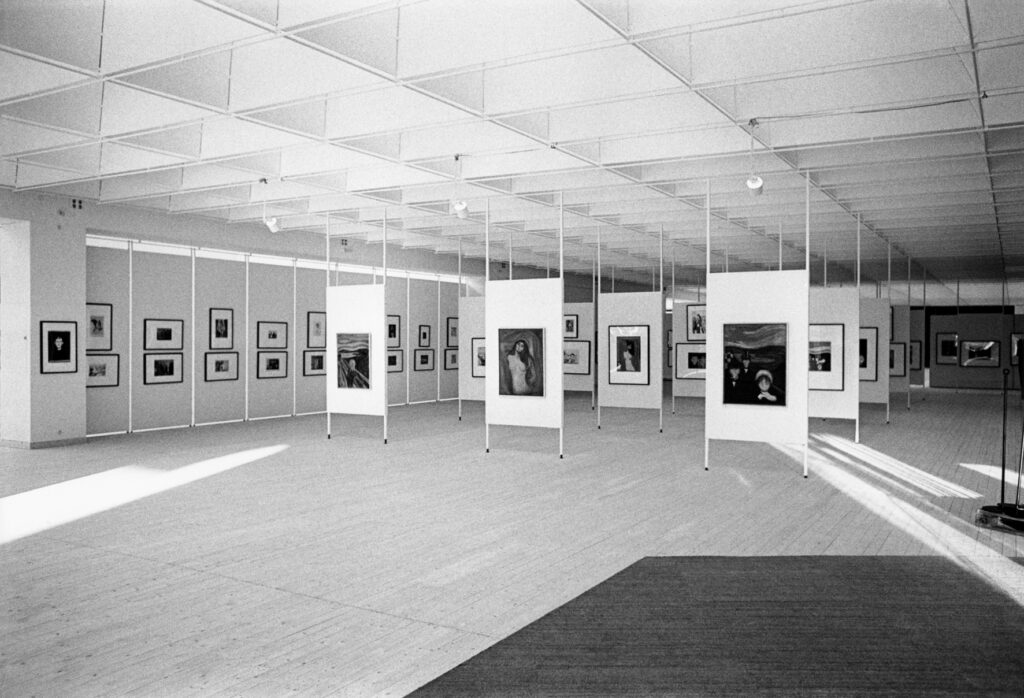
When Malmö Konsthall opened its doors to its very first visitors in March 1975, there were two exhibitions on show: a large solo exhibition of works by Edvard Munch–including the famous “The Scream”, “Anxiety” and “Madonna”, and a group exhibition featuring contemporary artists titled “Ögon-Blickar/New Media 1”. These exhibitions were followed soon after by a Vincent Van Gogh exhibition. As the coming years would demonstrate, an institution of this relatively modest size will always find it challenging to produce such prestigious exhibitions consistently.
Introduced Major Artistic Talent
Malmö Konsthall has many times been the first to show artists who have later gone on to be hugely influential. Listed among the participating artists in the first exhibition from 1975, “Ögon-Blickar/New Media 1”, were names like John Baldessari, Bernhard and Hilla Becher, Annette Messager, Edward Ruscha and Katharina Sieverding–all of whom have since produced bodies of work that have won increasing international recognition. Malmö Konsthall has always worked with local, regional, and international artists alike, and historically the emphasis and character of the work shown has varied with new each director.
Mats Stjernstedt 2017–
Diana Baldon 2014–2016
Jacob Fabicius 2008–2013
Lars Grambye 2003–2007
Bera Nordal 1997–2002
Sune Nordgren 1990–1996
Björn Springfeldt 1986–1989
Eje Högestätt 1975–1986
- … the proceeds of the raffle organised by the Malmö Konsthall foundation back in 1931 have since been converted into an annual grant, which has been awarded to an active Malmö-affiliated artist each year since 1997?
- … the vine that grows on the outer concrete wall of Malmö Konsthall, along Munkgatan, is a Parthenocissus grapevine?
- …the floor inside the Malmö Konsthall gallery space is the original floor, which was made from 2-inch boards of unplaned pine?
- … White Arkitekter, apart from the addition to Malmö Konsthall, also designed the large square (Konsthallstorget and S:t Johannesplan) that has been in front of Malmö Konsthall since 2014, and which is located between the S:t Johannes Church and Pildammsvägen?
- … Åke Axelsson also designed spaces and furniture for places like Livrustkammaren (The Royal Armoury), the Moderna Museet restaurant, and the library of the Swedish Parliament in Stockholm, the Naval Museum in Karlskrona, and Värmlands Museum in Karlstad?
- …
- … Hantverkshuset, som har entré rakt in i Konsthallens kafé & restaurang, rymmer hörsal, barnverkstad, ramverkstad och kansli. I början av 1900-talet var det ett s.k. änkehus efter hantverkare som avlidit och vars fruar utan egen inkomst hade möjlighet att få en liten bostad. En sådan var i Malmö Konsthalls bokhandels inre rum, med köksfönster riktat ut mot nuvarande receptionsdisken.
To our exhibition archive
Malmö Konsthalls’ architecture
Malmö Konsthall’s photographers